Antioxidant
Glutathione dosage: why no approved human dose exists for injectable glutathione, why animal doses and forum protocols mislead, and who really decides.
In the warning letters that FDA issued in August 2026 to five online peptide distributors, dosing recommendation was mentioned as an indication that a product was intended for humans. One of the reasons why you won’t find any dosage figures for glutathione on this website is just that. The other reason is that there is no FDA-approved recommended human dose of injectable glutathione for the wellness or skin applications it is sold for, so any number published online is just an opinion rather than a standard.
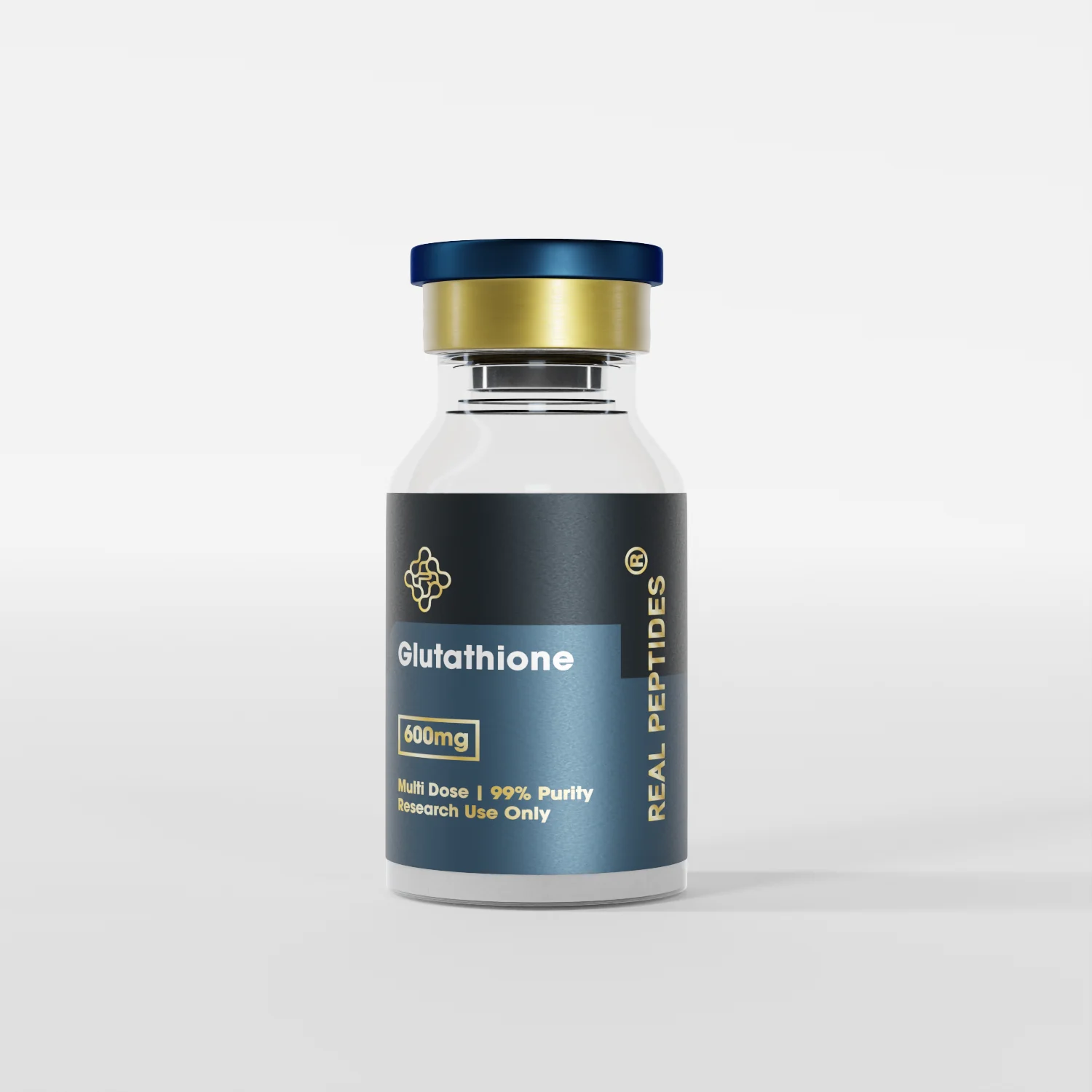
We can clarify what a dependable dose is, as well as explain how the figures that one can find on forums and certain retail sites cannot be relied upon, and who regulates glutathione administration in a clinical setting. What is available on this website is research-grade glutathione that is suitable exclusively for research.
Since FDA has not approved any injectable glutathione products for cosmetic and wellness purposes, there is no validated dosage in humans. Approved dosing is derived from controlled clinical trials which test safety and efficacy with approved dosages of the product, and such trials have not shown results leading to FDA approval for these indications.
If there is no label, then there is no basis for comparison. Clinics, Instagram users, or product manufacturers can all provide numbers, but their information does not have the status of an approved product label. Personally, I regard every glutathione dosage guide I come across as marketing material until I have evidence to the contrary.
It is not possible to extrapolate dosages used in laboratory and animal studies to dosages for humans through simple arithmetic. Animals metabolize substances differently, studies using controlled environments and predetermined outcomes, and a result obtained from a rodent or cell culture does not say anything at all about what a human would experience.
The same is true for the research-compound industry. For instance, MOTS-c and epithalone mainly have research foundations that consist of animal studies and even the FDA’s advisory votes in July 2026 did not provide any dosage to be administered to humans. In the case of glutathione, the most interesting research is about the functionality of the substance in the cell, which absolutely does not explain how much should be taken from outside.
This is, thus, the crux of any glutathione dosage estimation based on research literature. Anyone who takes a value from an animal study and converts it into their own body weight is merely estimating a figure, which is fraught with danger.
The "protocols" for glutathione that have been discussed on forums and social media outlets are stories of personal experiences. They are mostly reports from one individual which do not involve any control group or any proof of the contents contained in the vial as well as no assessment of possible negative effects.
Copying a stranger's routine with an unverified injectable combines every risk at once. Our side effects page explains the general risks of injected products, including infection and allergic reactions.
FDA's position, stated with the August 2026 letters, is that a "research use only" label does not protect a vendor whose website points toward human use. Dosing guidance, reconstitution calculators and bacteriostatic water sold next to injectables were all cited as that kind of evidence.
In terms of the buyer, this information has value. A company that gives dosing charts is either disregarding FDA’s views or is not actually selling anything for research purposes. Whichever the case, one would still doubt what else they claim to be true. Good companies sell their product, the certificate of analysis, and nothing that indicates how to use it.
The regulatory timeline is on our glutathione FDA status page.
When glutathione is administered to individuals in a clinical setting, physicians or clinicians determine the dosage and administer the medication. This decision is based on the history, medication and health condition of the patient, which is something that cannot be assessed by any website.
This is true for other prescription longevity products, like compounded NAD+ provided by telehealth solutions. The prescriber will do the prescribing after a medical assessment. Research vials, however, differ since they do not require consultations or instructions for human use. The glutathione vial mentioned on this website is one such example.
If you are considering glutathione for your own health, ask your doctor, and ask what evidence supports the benefit you are hoping for. We set out the claims against the evidence on the glutathione injection benefits page, and the formats on the IV vs injection vs research vial page.
In the warning letters that FDA issued in August 2026 to five online peptide distributors, dosing recommendation was mentioned as an indication that a product was intended for humans. One of the reasons why you won’t find any dosage figures for glutathione on this website is just that. The other reason is that there is no FDA-approved recommended human dose of injectable glutathione for the wellness or skin applications it is sold for, so any number published online is just an opinion rather than a standard.
We can clarify what a dependable dose is, as well as explain how the figures that one can find on forums and certain retail sites cannot be relied upon, and who regulates glutathione administration in a clinical setting. What is available on this website is research-grade glutathione that is suitable exclusively for research.
Since FDA has not approved any injectable glutathione products for cosmetic and wellness purposes, there is no validated dosage in humans. Approved dosing is derived from controlled clinical trials which test safety and efficacy with approved dosages of the product, and such trials have not shown results leading to FDA approval for these indications.
If there is no label, then there is no basis for comparison. Clinics, Instagram users, or product manufacturers can all provide numbers, but their information does not have the status of an approved product label. Personally, I regard every glutathione dosage guide I come across as marketing material until I have evidence to the contrary.
It is not possible to extrapolate dosages used in laboratory and animal studies to dosages for humans through simple arithmetic. Animals metabolize substances differently, studies using controlled environments and predetermined outcomes, and a result obtained from a rodent or cell culture does not say anything at all about what a human would experience.
The same is true for the research-compound industry. For instance, MOTS-c and epithalone mainly have research foundations that consist of animal studies and even the FDA’s advisory votes in July 2026 did not provide any dosage to be administered to humans. In the case of glutathione, the most interesting research is about the functionality of the substance in the cell, which absolutely does not explain how much should be taken from outside.
This is, thus, the crux of any glutathione dosage estimation based on research literature. Anyone who takes a value from an animal study and converts it into their own body weight is merely estimating a figure, which is fraught with danger.
The "protocols" for glutathione that have been discussed on forums and social media outlets are stories of personal experiences. They are mostly reports from one individual which do not involve any control group or any proof of the contents contained in the vial as well as no assessment of possible negative effects.
Copying a stranger's routine with an unverified injectable combines every risk at once. Our side effects page explains the general risks of injected products, including infection and allergic reactions.
FDA's position, stated with the August 2026 letters, is that a "research use only" label does not protect a vendor whose website points toward human use. Dosing guidance, reconstitution calculators and bacteriostatic water sold next to injectables were all cited as that kind of evidence.
In terms of the buyer, this information has value. A company that gives dosing charts is either disregarding FDA’s views or is not actually selling anything for research purposes. Whichever the case, one would still doubt what else they claim to be true. Good companies sell their product, the certificate of analysis, and nothing that indicates how to use it.
The regulatory timeline is on our glutathione FDA status page.